

Reproductive Medicine · Career Insights
8 min read
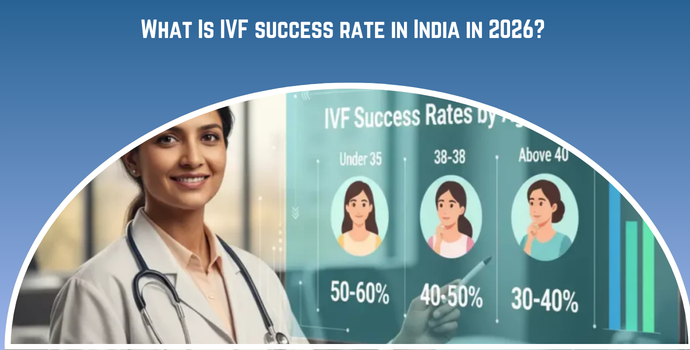
India’s IVF demand is shifting beyond the metros — and clinics in smaller cities are racing to keep up.
For years, IVF in India has meant Delhi, Mumbai, Bengaluru, Chennai. But that’s changing fast — and the next big wave of patients won’t be walking into metro clinics. They’ll be walking into clinics in Meerut, Jaipur, Indore, Nagpur, and dozens of cities like them.
If you’re a gynaecologist or OBG specialist weighing whether to add IVF to your practice, this is the moment to pay attention.
The Numbers Behind India’s IVF Boom
A few stats make the picture clear:
- India’s IVF market is projected to grow from $900 million in 2024 to $1.87 billion by 2029, with some estimates placing it as high as $5.05 billion by 2033 (16% CAGR).
- Annual IVF cycles are expected to rise from roughly 200,000–250,000 today to nearly 400,000 by 2030 — with a growing share coming from smaller cities.
- India is opening more than one new fertility centre every week — 60–70 new centres launch annually.
- Infertility now affects over 27 million couples in India, as the national Total Fertility Rate fell to 1.9 births per woman in 2025 — below replacement level.
Put simply: demand is rising faster than metro clinics can absorb it. That overflow is going somewhere — and it’s going to tier 2 and tier 3 cities.
Why Tier 2 Cities, Specifically?
1. Affordability is pulling patients out of metros.
IVF treatment in tier 2 and tier 3 cities typically costs 25–30% less than in metro clinics, even though a single cycle anywhere in India still runs roughly ₹1–3 lakh.
2. Access, not demand, has been the real bottleneck.
As Dr. Ajay Murdia, founder of Indira IVF, has noted, infertility rates are climbing fastest in lower-income and tier 2/3 city populations — precisely where access to healthcare, nutrition, and education remains limited.
3. Infrastructure has quietly caught up.
As of 2024, 112 tier 2 and tier 3 cities already had the diagnostic imaging and anaesthesia coverage needed for day-care IVF procedures — enabling a “hub-and-spoke” model between metro expertise and satellite clinics.
4. Organised fertility chains are expanding there first.
Between 2022 and 2025, organised fertility networks grew from 110 to 165 operational centres across tier 1 and tier 2 corridors.
5. Stigma is fading faster than expected.
Awareness campaigns and visible success stories have reduced the silence around infertility treatment — even in smaller towns where it was once taboo.
Which Tier 2 Cities Are Leading This Shift?
Industry trend reports point to cities like Haldwani, Jamnagar, Meerut, Amritsar, and Prayagraj as early movers — but the pattern extends to most state-capital and large district-headquarter cities with reasonable hospital infrastructure: think Lucknow, Indore, Nagpur, Coimbatore, Bhubaneswar, Patna, and Jodhpur. The common thread isn’t population size alone — it’s rising local income, at least one well-equipped hospital, and a patient base currently forced to travel for treatment.
The Opportunity — and the Shortage — for Doctors
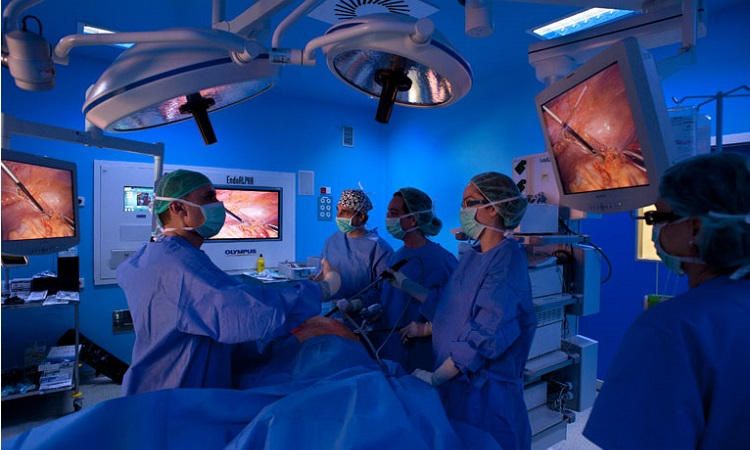
The clinics are opening faster than trained specialists are available to staff them.
- India has an acute shortage of qualified infertility specialists, with most advanced ART historically concentrated in metro hospitals.
- Even as new centres open rapidly, networks report plenty of facilities but a real, growing shortage of trained fertility doctors and embryologists to run them.
- This shortage is exactly why many tier 2 clinics rely on rotating specialists from metros — a gap a locally trained, resident specialist is perfectly positioned to close.
For an OBG or gynaecology doctor already practising in or near a tier 2 city, this isn’t a distant trend — it’s a near-term, local opportunity to become the go-to fertility specialist in a market that doesn’t have one yet.
How Doctors Should Prepare: A Practical Roadmap
Get hands-on ART training — not just theory. Look for a program with live case exposure, OPU practice, embryology lab time, and real patient interaction — not just lectures.
Understand ART Act and PCPNDT compliance before you start. This is non-negotiable and should be built into any training path you choose.
Match the course format to your practice stage. A full fellowship in reproductive medicine suits doctors adding complete IVF services; a certificate course in IUI & OPU is a faster entry point; a PG diploma in clinical embryology fits life-sciences graduates.
Build relationships with hub clinics or networks early. Given the hub-and-spoke model many tier 2 markets use, early connections can fast-track referrals once you’re trained.
Plan for local awareness-building from day one. Being the only trained IVF specialist in your city is a huge advantage — but only if patients know you exist.
Frequently Asked Questions
Is IVF training possible without an MD in Gynaecology?
Yes — most fellowship and certificate programs accept MBBS, MD, MS, DNB, DGO, and OBS-GYNAE qualifications. Life sciences graduates (non-MBBS) can pursue clinical embryology tracks instead.
How long does an IVF fellowship typically take?
Fellowship programs generally run 6–12 months, often with live or hybrid formats. Shorter certificate courses (IUI/OPU) can run a few weeks to a few months.
Is starting an IVF practice financially viable in a tier 2 city?
Early indicators suggest yes — lower treatment costs are offset by lower competition and genuine unmet demand, though metro practices still generally command a premium.
Do I need to relocate to a metro city to get trained?
Not necessarily. Many training institutes now combine hands-on training blocks at partner hospitals with live/online theory, so doctors from smaller cities don’t need to relocate for months.
What’s the biggest mistake doctors make entering this field?
Choosing a course heavy on lectures and light on hands-on clinical exposure. Live case experience — OPUs, embryo transfers, real patient management — is what actually builds competence and patient trust.
The Bottom Line
The next decade of India’s IVF growth isn’t going to be won in Delhi or Mumbai — it’s going to be won in the cities that don’t yet have a trained specialist. For doctors willing to invest in proper hands-on ART training now, tier 2 cities represent one of the clearest, least-contested opportunities in Indian reproductive medicine today.

Ready to become your city’s IVF specialist?
Fellowship & PG Diploma in Reproductive Medicine at Manifesta Medical Academy — live, hands-on ART training for practising doctors.
Explore Programs → manifesta.co.in
Leave a Reply